
Cyst & Lipoma Removal
Cyst & Lipoma Removal Toowoomba
Doctor-Led Assessment and Minor Surgery at OJ Clinics
Found a lump under your skin that you think may be a cyst or lipoma?
Most cysts and lipomas are benign, but not every lump is the same. Some can be safely left alone, while others may become painful, repeatedly inflamed, grow over time or simply become uncomfortable because of their size or location.
At OJ Clinics in East Toowoomba, Dr Omi Jindal assesses cysts, lipomas and other skin or subcutaneous lumps and, where clinically appropriate, can remove suitable lesions under local anaesthetic.
Dr Jindal is a GP with extensive procedural experience and a particular interest in skin cancer medicine and minor surgery. Before moving to Australia, he trained and worked in general surgery and plastic and reconstructive surgery in India. He later obtained Fellowship of the Royal Australian College of General Practitioners and completed a Master of Medicine in Skin Cancer at the University of Queensland.
He later obtained Fellowship of the Royal Australian College of General Practitioners and completed a Master of Medicine in Skin Cancer at the University of Queensland.
His approach is straightforward:
First establish what the lump is and whether it should be removed, then discuss the safest and most appropriate treatment.
No referral is required for an assessment.
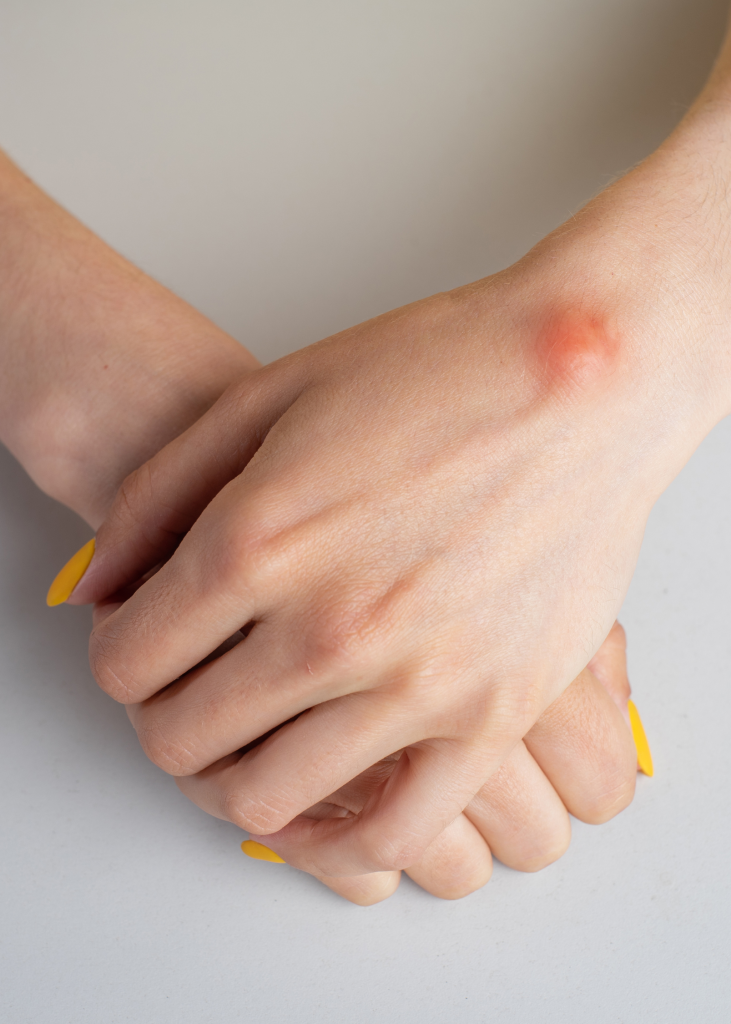
What Is a Cyst?
A cyst is a sac or lump that develops within or beneath the skin.
One of the most common types is an epidermoid cyst, sometimes referred to by patients as a sebaceous cyst.
A cyst may feel like a smooth or firm lump beneath the skin. Some have a small central opening or punctum. They can remain unchanged for years, gradually enlarge, or occasionally become inflamed or infected.
You may consider having a cyst assessed if it:
- Is increasing in size.
- Becomes painful or tender.
- Repeatedly becomes red or inflamed.
- Has previously become infected.
- Discharges material.
- Catches on clothing.
- Causes discomfort.
- Is bothering you because of its location or appearance.
Not every cyst needs surgery.
Dr Jindal will examine it first and discuss whether observation, treatment or removal is appropriate.
What Is a Lipoma?
A lipoma is a growth of fatty tissue that usually develops beneath the skin. Lipomas often feel soft or rubbery and can move slightly when pressed. They commonly grow slowly and many cause no symptoms at all.
Although many superficial lumps have features consistent with a lipoma, not every lump under the skin is a lipoma. That is why clinical assessment comes before removal.
You may want a lipoma assessed if it:
- 01 is getting larger
- 02 has become uncomfortable
- 03 causes pressure or tenderness
- 04 interferes with movement or clothing
- 05 has changed
- 06 is in a prominent or inconvenient location
- 07 you are uncertain what the lump is.
Cyst or Lipoma? How Can You Tell?
It is not always possible to reliably diagnose a lump yourself.
Cysts and lipomas may feel different, but there can be considerable overlap.
A cyst is often associated with the skin itself and may occasionally become inflamed, while a typical lipoma tends to feel softer and sits beneath the skin.
However, other conditions can also present as a lump.
During your consultation, Dr Jindal assesses factors such as:
Size
Location
Firmness
Depth
Mobility
Relationship to the skin
How long it has been present
Whether it is changing
Pain or tenderness
Previous inflammation or infection
Your medical history
The aim is not simply to remove the lump. It is to make sure the proposed treatment is appropriate.
Lump
When Should a Lump Be Checked?
Most lumps are not urgent, but a new or changing lump should not automatically be assumed to be a cyst or lipoma.
Consider arranging an assessment if a lump:
is growing
has changed noticeably
is unusually firm
appears fixed to deeper tissues
becomes painful
repeatedly becomes inflamed
has returned after previous removal
simply does not feel right to you
causes skin changes, ulceration or bleeding
Where the diagnosis is uncertain, Dr Jindal may recommend imaging, further investigation or referral rather than proceeding directly to removal.
Cyst Removal
Cyst Removal at OJ Clinics
Suitable cysts can often be removed at OJ Clinics as a minor procedure under local anaesthetic.
After numbing the area, an incision is made to access the cyst.
Where possible, Dr Jindal carefully removes both the contents of the cyst and its surrounding wall or capsule.
Removing the cyst wall is important because residual cyst lining can contribute to recurrence.
The wound is then closed using a technique appropriate for its size, depth and location.
Depending on the wound, closure may involve:
- simple skin sutures;
- deeper absorbable sutures; or
- layered closure.
You will receive wound-care instructions and information about follow-up and suture removal where required.
Inflammation
What If My Cyst Is Infected or Inflamed?
An inflamed cyst is not always best removed immediately.
When a cyst is acutely inflamed or infected, the surrounding tissues can be swollen and difficult to separate from the cyst wall. This can make complete excision more difficult.
Depending on what Dr Jindal finds during your assessment, treatment may involve managing the acute problem first and considering definitive removal once the area has settled.
The treatment plan is therefore based on the condition of the cyst at the time you are examined.
Lipoma Removal at OJ Clinics
Suitable superficial lipomas may also be removed under local anaesthetic.
Once the area is numb, Dr Jindal makes an appropriately positioned incision and carefully separates the lipoma from the surrounding tissues.
After removal, the wound is assessed and closed.
Larger lipomas can leave a space beneath the skin. In these situations, deeper sutures may sometimes be required to support the tissues and reduce dead space before the skin is closed.
Not every lipoma is suitable for removal in a general practice procedure room.
If a lipoma is particularly large, deep, fixed, recurrent or located close to important anatomical structures, Dr Jindal may recommend imaging or referral for treatment in a more appropriate setting.
Why See Dr Omi Jindal for Cyst or Lipoma Assessment?
For Dr Jindal, minor surgery is not simply about getting a lump out.
The assessment also includes thinking about:
What is the lump?
Does it actually need to be removed?
Can it be safely removed under local anaesthetic?
Where should the incision be placed?
What structures lie beneath or around it?
How should the wound be closed?
Would another treatment setting be more appropriate?
Dr Jindal's previous training and experience in general surgery and plastic and reconstructive surgery contributes to the way he approaches tissue handling, incision planning and wound closure.
He now brings that procedural background to his work as a GP at OJ Clinics in Toowoomba.
INCISION
Thoughtful Incision and Wound Planning
Every surgical incision leaves a scar.
For this reason, Dr Jindal considers the location of the lump, local skin tension, surrounding anatomy and the expected defect before beginning the procedure.
Depending on the site, the incision may be planned with consideration of natural skin lines and the way the surrounding tissues move.
The wound may then be closed in one or more layers according to its depth.
The aim is appropriate healing and wound support.
However, no doctor can guarantee an invisible or scar-free result.
Pathology
Will My Cyst or Lipoma Be Sent to Pathology?
Where clinically appropriate, tissue removed during a procedure may be sent for histopathological examination.
Histopathology means examining the tissue under a microscope.
This can help confirm what the removed lump actually was and identify unexpected findings that may require further management.
Dr Jindal will discuss whether pathology is appropriate for your procedure and how the result will be followed up.
Results
Will I Need Stitches?
Most cyst and lipoma excisions require some form of wound closure.
The type of closure depends on:
the size of the lump
how deep it extends
the location
tension on the wound
the amount of tissue removed
A small superficial wound may require straightforward skin sutures.
A deeper wound may require layered closure, with absorbable sutures supporting the deeper tissues before the skin is closed.
Will There Be a Scar After Cyst or Lipoma Removal?
Yes. Any procedure involving an incision through the skin will produce a scar. The final appearance of a scar varies considerably between people.
Factors that can influence scarring include:
the size of the lesion
the location of the wound
skin tension
individual healing characteristics
infection
smoking or nicotine use
underlying medical conditions
sun exposure
a personal tendency to develop hypertrophic or keloid scars
Dr Jindal will discuss the likely scar and relevant risks before proceeding.
Risks of Cyst and Lipoma Removal
Although these are generally considered minor surgical procedures, they are still medical procedures and carry potential risks.
These can include:
- pain or tenderness
- bleeding or bruising
- swelling
- infection
- delayed wound healing
- wound separation
- numbness or altered sensation
- visible scarring
- widened or raised scars
- hypertrophic or keloid scarring
- contour change
- incomplete removal
- recurrence
- unexpected pathology findings
- reaction to local anaesthetic or dressings
- the need for further treatment
The risks that are particularly relevant to your procedure will be discussed during the consent process.
Recovery
What Is Recovery Like?
Recovery depends on the size and location of the lump and the extent of the procedure.
Many patients can return to normal light activities relatively quickly, although strenuous activity may need to be limited while the wound is healing.
You will receive individual aftercare instructions.
These may include advice about:
dressings
showering
exercise and lifting
pain relief
signs of infection
keeping the wound clean and protected
wound review
when sutures should be removed
The amount of time you should avoid physical work or exercise depends particularly on where the wound is located and how much tension the activity places on it.
We are committed to maintaining the highest standards of patient privacy. We never use or publish your photographs or personal information.
Other Services at OJ Clinics
Frequently Asked Questions
No.
You can book directly with OJ Clinics in East Toowoomba for assessment of a cyst, lipoma or other skin lump.
Sometimes, but assessment usually comes first.
Whether removal can be performed on the same day depends on the diagnosis, size and location of the lump, the complexity of the procedure and the procedure time available.
Where appropriate, a separate procedure appointment will be arranged.
No.
Some cysts are better observed, while inflamed or infected cysts may require initial treatment before definitive excision.
The location and size of the cyst also matter.
Dr Jindal will advise you after examining it.
Removing the complete cyst wall reduces the likelihood of recurrence, but recurrence is still possible.
A cyst that has previously ruptured, become infected or undergone treatment can sometimes be more difficult to remove completely.
No.
Many lipomas can simply be observed.
Removal may be considered when a lipoma is growing, uncomfortable, interfering with normal activities or causing concern.
It depends on its size, depth and location.
Some larger or deeper lipomas are not suitable for removal in a general practice procedure room and may require imaging or referral.
Dr Jindal will assess this before recommending treatment.
Suitable procedures are generally performed under local anaesthetic.
You will usually feel the anaesthetic injection initially. Once the area is adequately numb, you may still feel pressure, movement or pulling, but the operative area should not normally feel sharp pain.
Procedure time varies considerably depending on the size, depth and location of the lump.
A small uncomplicated cyst may be relatively straightforward, whereas a larger or deeper lipoma can require more extensive dissection and wound closure.
Dr Jindal can give you a better indication after examining the lesion.
That depends mainly on the procedure site and the type of work you do.
People with sedentary jobs may require little disruption, whereas heavy physical work may place tension on the wound and require a longer period of activity restriction.
This will be discussed as part of your treatment plan.
Medicare rebates may apply to some clinically indicated procedures, depending on the circumstances and applicable Medicare requirements.
Procedures performed solely for cosmetic reasons may not attract a Medicare benefit.
OJ Clinics will explain the expected fee and any anticipated out-of-pocket cost before the procedure is booked.
That is one of the reasons assessment is important.
If the lump does not have the expected features of a straightforward cyst or lipoma, Dr Jindal may recommend further investigation, imaging, biopsy or referral rather than simply removing it.
Start With a Conversation