Cryotherapy
Cryotherapy
Medical cryotherapy in East Toowoomba for selected sunspots, warts and superficial skin lesions. Doctor-led assessment and liquid nitrogen treatment. No referral required.
Cryotherapy in Toowoomba
Liquid Nitrogen Treatment for Sunspots and Selected Skin Lesions
Cryotherapy is a medical treatment that uses liquid nitrogen to freeze and destroy selected abnormal skin cells. It is commonly used for individual actinic keratoses, also known as sunspots, as well as warts and certain benign or superficial skin lesions.
At OJ Clinics in East Toowoomba, cryotherapy is performed by Dr Omi Jindal, a General Practitioner with postgraduate training in skin cancer medicine. Every lesion is assessed before treatment, with dermoscopy used where appropriate.
Cryotherapy may be performed during the same consultation when the diagnosis is sufficiently clear and treatment is clinically suitable. However, not every lesion should be frozen. A suspicious, uncertain or higher-risk lesion may require a biopsy, surgical excision or specialist assessment instead.
No referral is required to book an appointment.
- Doctor-led assessment before treatment
- Liquid nitrogen cryotherapy
- Dermoscopic examination where appropriate
- Same-day treatment may be available
- Biopsy and excision available on site
- No referral required
- Medicare rebates may apply
What Is Medical Cryotherapy?
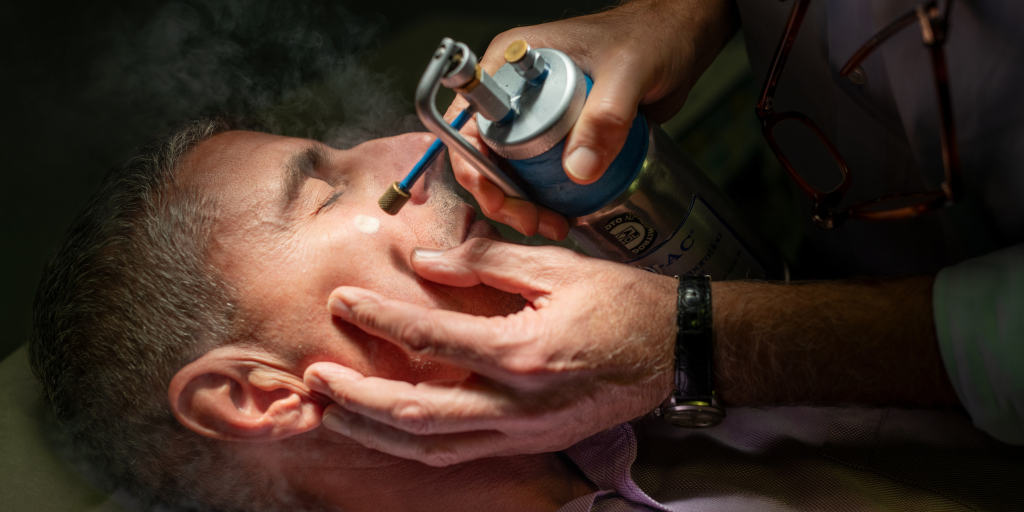
Cryotherapy, also known as cryosurgery, uses extreme cold to destroy targeted skin tissue.
In most medical skin treatments, liquid nitrogen is used. Liquid nitrogen has a temperature of approximately −196°C and may be applied using a spray device or a specialised applicator. The rapid freezing and subsequent thawing damage the targeted cells, allowing the treated tissue to gradually separate as the skin heals.
The treatment itself usually takes only a few seconds for each lesion. Depending on the type, thickness and location of the lesion, the doctor may use one or more freeze-and-thaw cycles.
Cryotherapy is different from whole-body cryotherapy chambers promoted for sport, wellness or recovery. This page refers specifically to medical liquid nitrogen treatment for skin lesions.
What Can Cryotherapy Treat?
Cryotherapy can be used for a range of benign, precancerous and selected superficial malignant skin lesions. The decision depends on having a sufficiently confident diagnosis and determining that freezing is an appropriate treatment for the particular lesion and body area.
Actinic Keratoses
Actinic keratoses, also called solar keratoses or sunspots, are rough or scaly areas caused by long-term ultraviolet exposure.
They commonly occur on areas such as:
- The face
- Scalp
- Ears
- Forearms
- Backs of the hands
- Lower legs
Cryotherapy is commonly used for isolated actinic keratoses, particularly where there are only a small number of clearly defined lesions.
Viral Warts
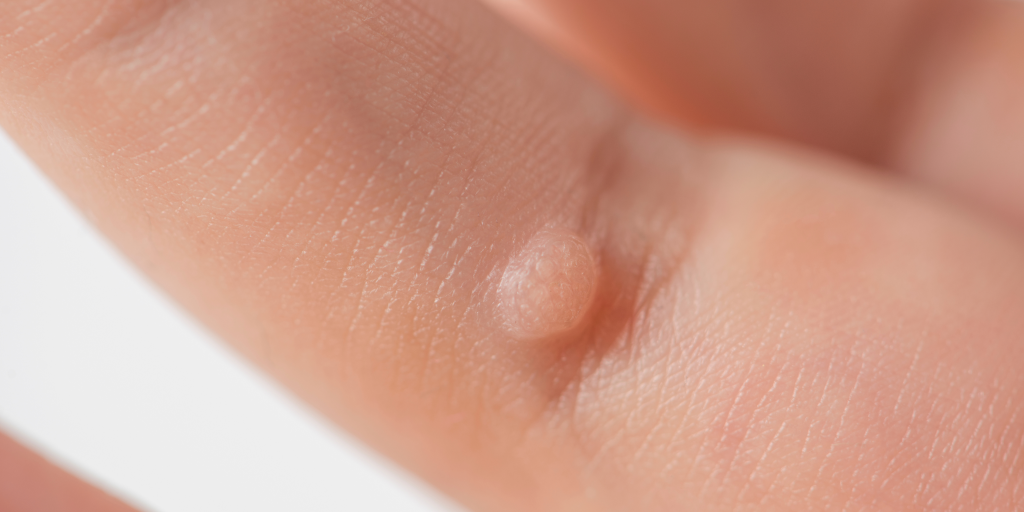
Liquid nitrogen may be used to treat common warts and plantar warts.
Warts often require more than one treatment. The number and frequency of treatments depend on the wart’s size, depth, location and response to previous freezing. Cryotherapy for warts can be uncomfortable and commonly causes blistering.
Seborrhoeic Keratoses
Seborrhoeic keratoses are common benign skin growths that may appear raised, rough, waxy or stuck onto the skin.
Cryotherapy may be suitable for selected thinner lesions. Other removal methods may be more appropriate for thicker growths or lesions where the diagnosis is uncertain.
Skin Tags
Some small skin tags can be treated with cryotherapy. The most appropriate method depends on the size and position of the skin tag and whether freezing, snipping, cautery or another approach is likely to produce the best result.
Selected Superficial Skin Cancers
Cryotherapy may occasionally be considered for carefully selected superficial basal cell carcinomas or areas of intraepidermal squamous cell carcinoma, also known as Bowen disease.
It is not suitable for every superficial skin cancer. The diagnosis, lesion size, location, borders, depth, recurrence risk and patient-specific factors must be considered. A biopsy may be required before destructive treatment is recommended.
When Should Cryotherapy Not Be Used?
Cryotherapy destroys tissue without producing a specimen for pathology. It should not be used when microscopic examination is needed to establish or confirm the diagnosis.
Cryotherapy is generally not appropriate for:
- A suspected melanoma
- An undiagnosed pigmented lesion
- A lesion where the diagnosis remains uncertain
- A lesion that requires pathology assessment
- Most invasive squamous cell carcinomas
- Deeper or higher-risk basal cell carcinomas
- Recurrent skin cancer
- Lesions with poorly defined borders
- Cancers involving higher-risk anatomical areas
- Lesions where surgical margin assessment is important
- Areas with significantly impaired circulation or healing
Melanoma should not be treated with cryotherapy. A suspicious pigmented lesion generally requires appropriate biopsy or excision so that the tissue can be examined by a pathologist.
If Dr Jindal recommends a biopsy or excision instead of freezing, it is because obtaining the correct diagnosis or achieving more reliable treatment is more important than the convenience of a same-day procedure.
Why Is Assessment Necessary Before Cryotherapy?
Patients sometimes request that a spot simply be frozen. However, lesions that look similar can represent very different conditions.
Before recommending cryotherapy, Dr Jindal will consider:
- How long the lesion has been present
- Whether it has changed
- Whether it bleeds, crusts, hurts or fails to heal
- Its colour, shape, thickness and borders
- Its location on the body
- Your previous skin cancer history
- Your medications and medical conditions
- Whether dermoscopic examination is required
- Whether tissue should be sent for pathology
Assessment is especially important because no tissue remains for laboratory testing after a lesion has been destroyed by freezing.
What Happens During Cryotherapy?
Cryotherapy is usually performed during a standard consultation or a short procedure appointment.
Examination
The lesion is assessed to determine whether cryotherapy is appropriate. Dermoscopy may be used if a closer examination is required.
Explanation and Consent
Dr Jindal will explain:
- The likely diagnosis
- Why cryotherapy is being recommended
- What the treatment involves
- Other available treatment options
- The expected healing process
- The possibility of recurrence
- The risk of skin colour change or scarring
Liquid Nitrogen Application
Liquid nitrogen is applied directly to the lesion using a spray or applicator.
The skin usually turns white as it freezes. The treated area then thaws over several seconds. Some lesions require a second freeze after the first thaw.
Dressing
Many small sites do not require a dressing immediately after treatment. A simple dressing may be applied if the area is likely to rub against clothing, blister significantly or produce fluid.
Does Cryotherapy Hurt?
Cryotherapy usually causes an intense cold, stinging or burning sensation while the liquid nitrogen is applied.
The discomfort generally settles after treatment, although the area may remain tender for several hours. Sensitive locations, thicker lesions and longer freeze times may cause more discomfort.
Local anaesthetic is not usually required for small, superficial lesions. It may be considered in selected circumstances.
What Should I Expect After Cryotherapy?
The skin’s response depends on the intensity of treatment, the type of lesion and the area treated.
Immediately After Treatment
The area may become:
- Red
- Swollen
- Tender
- Tingly or numb
- Slightly raised
During the First Day
A clear or blood-stained blister may develop. Blistering is a recognised response to cryotherapy and does not automatically indicate a complication. (DermNet®)
Over the Following Days
The blister may flatten and form a crust or scab. The treated tissue gradually separates as the skin underneath heals.
Do not pick, cut or pull at the blister or scab.
Healing
Healing time varies according to the body area and the depth of treatment.
Facial sites often heal more quickly than the hands, forearms or lower legs. Actinic keratoses treated on the face may heal within approximately one to two weeks, while sites on the hands or lower legs can take several weeks or longer. (DermNet®)
Cryotherapy Aftercare
You will receive instructions suited to the lesion and area treated.
General aftercare may include:
- Keep the area clean.
- Wash gently with soap and water.
- Pat the area dry rather than rubbing.
- Do not deliberately burst a blister.
- Do not pick the crust or scab.
- Apply a simple dressing if the area rubs against clothing.
- Use suitable simple pain relief if needed.
- Avoid swimming or soaking the area if the skin surface is open.
- Protect the healed area from sun exposure.
If a blister breaks, gently clean the area and cover it with a non-stick dressing if required.
When Should I Contact the Clinic?
Contact OJ Clinics if you develop:
- Increasing pain rather than gradual improvement
- Redness that continues to spread
- Increasing warmth or swelling
- Pus or unpleasant-smelling discharge
- Fever or feeling generally unwell
- Persistent bleeding
- A wound that is not healing as expected
- Any other symptom that concerns you
Infection after cryotherapy is uncommon but can occur, particularly if the blistered or open area is repeatedly disturbed.
What Are the Risks of Cryotherapy?
Cryotherapy is a destructive procedure and carries potential risks.
These may include:
- Pain or tenderness
- Redness and swelling
- Blistering
- Weeping or crusting
- Bleeding
- Infection
- Slow wound healing
- Temporary numbness
- Permanent altered sensation in uncommon cases
- Lightening of the skin
- Darkening of the skin
- Hair loss within the treated area
- Scarring
- Incomplete clearance
- Recurrence of the lesion
- The need for repeat treatment
- Delayed diagnosis if an unsuitable lesion is treated without biopsy
Hypopigmentation, or permanent lightening of the skin, is a recognised effect of cryotherapy. It may be more noticeable in naturally darker or tanned skin. More intensive freezing can also increase the risk of scarring and other tissue damage.
The risks relevant to your proposed treatment will be discussed before you decide whether to proceed.
Will Cryotherapy Leave a Scar?
Cryotherapy does not involve cutting the skin, but it still creates a controlled injury and can leave a permanent mark.
The treated area may heal with:
- Lighter skin
- Darker skin
- A flat pale patch
- A change in texture
- A small indentation
- A raised or widened scar in uncommon cases
The chance of a noticeable mark depends on:
- The intensity and duration of freezing
- The number of freeze cycles
- The body area
- The depth and thickness of the lesion
- Your skin type
- Your individual healing response
Before treating a visible area, Dr Jindal will discuss the likely cosmetic outcome and whether another treatment may be preferable.
Can the Lesion Return?
Yes. Cryotherapy does not guarantee permanent clearance.
A lesion may recur because:
- The full depth was not destroyed
- Its borders extended beyond the treated area
- The lesion was thicker than expected
- The condition commonly recurs
- New sun damage has produced another lesion nearby
- Repeat treatment is required as part of the usual treatment course
If a treated spot returns, continues to grow or fails to heal, it should be reassessed rather than repeatedly frozen without review.
Cryotherapy for Extensive Sun Damage
Cryotherapy is best suited to treating individual, clearly defined lesions.
When actinic keratoses are widespread across an area such as the scalp, face, forearms or hands, treating every spot separately may not be the most appropriate strategy.
Dr Jindal may discuss a field treatment designed to treat a broader area of sun-damaged skin. Depending on your circumstances, options may include prescription topical treatment, photodynamic therapy or referral for another appropriate treatment.
Field treatments usually produce an expected inflammatory skin reaction during the treatment course. The likely redness, crusting, discomfort, recovery time and required sun protection should be understood before treatment begins.
Cryotherapy and field treatment may sometimes be used together—for example, freezing thicker individual lesions while treating the surrounding sun-damaged area separately. RACGP guidance recognises the distinction between treating isolated actinic keratoses and managing broader areas of field change.
Cryotherapy or Biopsy: How Is the Decision Made?
Cryotherapy may be appropriate when:
- The diagnosis is sufficiently clear
- The lesion is known to respond to freezing
- Pathology is not required
- The anatomical site is suitable
- The expected risks are acceptable
- You understand the possibility of recurrence and skin colour change
A biopsy may be more appropriate when:
- The diagnosis is uncertain
- Melanoma is being considered
- The lesion is changing or unusual
- It bleeds or fails to heal
- The lesion may be invasive
- Pathology will affect the treatment plan
- Previous cryotherapy has failed
- The lesion has returned after treatment
The safest treatment begins with the right diagnosis.
Why Choose OJ Clinics for Cryotherapy?
Doctor-Led Assessment
Every lesion is assessed by Dr Omi Jindal before treatment. Cryotherapy is not performed simply because a patient requests that a spot be frozen.
Dermoscopy Where Appropriate
A dermatoscope may be used to assess a lesion more closely when visual examination alone does not provide enough information.
Same-Day Treatment May Be Available
When the diagnosis is clear and cryotherapy is appropriate, treatment may be performed during the same consultation.
Biopsy and Excision Available On Site
If a lesion should not be frozen, many skin biopsies and excisions can be performed at OJ Clinics under local anaesthetic.
Clear Discussion of Alternatives
You will be told when monitoring, biopsy, excision, field treatment or specialist referral would be more appropriate than cryotherapy.
Continuity of Care
Assessment, treatment, wound review and future skin surveillance can be managed through the same clinic.
No Referral Required
You can book directly with OJ Clinics for assessment of a sunspot, wart or other skin lesion.
Cryotherapy for Toowoomba and the Darling Downs
OJ Clinics provides medical cryotherapy and skin lesion assessment for patients from East Toowoomba, Rangeville, Middle Ridge, Kearneys Spring, Highfields and communities throughout Toowoomba and the Darling Downs.
We are committed to maintaining the highest standards of patient privacy. We never use or publish your photographs or personal information.
Other Services at OJ Clinics
Frequently Asked Questions
Cryotherapy is a medical treatment that uses extreme cold, usually liquid nitrogen, to freeze and destroy selected abnormal skin tissue.
Cryotherapy may be used for individual actinic keratoses, warts and selected benign or superficial skin lesions. It is not appropriate for every lesion.
No. A suspected melanoma should not be treated with cryotherapy. It requires appropriate biopsy or excision so the tissue can be examined by a pathologist.
Some lesions that look like sunspots may represent another condition or skin cancer. The lesion must be assessed before treatment. Extensive areas of sun damage may also be better managed with field treatment.
Most people experience a strong cold sting or burning sensation during treatment. Tenderness may continue for several hours afterward.
A blister commonly develops after cryotherapy. It may be clear or blood-stained and is usually part of the expected treatment response.
Do not deliberately burst the blister. Keep the area clean and protect it with a dressing if needed. Contact the clinic if you are concerned.
Healing time depends on the body area and depth of treatment. Facial sites usually heal more quickly, while the hands and lower legs may take several weeks.
It can. Permanent skin lightening is a recognised effect and may be more noticeable in darker or tanned skin.
Yes. Scarring is less common after lighter treatment but remains possible, particularly after intensive freezing or slow healing.
Yes. Some lesions require repeat treatment, and others may recur after initially appearing to clear.
It may be possible when the lesion has been properly assessed, the diagnosis is sufficiently clear and time permits. Otherwise, a separate appointment may be arranged.
No. You can book directly with OJ Clinics.
Medicare rebates may apply when cryotherapy is medically indicated and relevant eligibility requirements are met. Cosmetic treatment of benign lesions may not attract a Medicare rebate. Contact the clinic for current fees and expected out-of-pocket costs.
Book a Cryotherapy Assessment in Toowoomba
- A rough or scaly sunspot
- A persistent wart
- A raised or irritated benign lesion
- A previously treated lesion that has returned
- A spot you believe may need freezing
- A lesion that is changing, bleeding or failing to heal
Every lesion is assessed before treatment. If cryotherapy is not the most appropriate option, Dr Jindal will explain why and discuss biopsy, excision, monitoring or referral where required.